
Film and TV bingo

Film and TV bingo cards can track tropes, titles, characters, genres, or moments during a live broadcast. Choose a card that matches what the group is watching and what they already know. Agree on spoiler, pause, and rul...
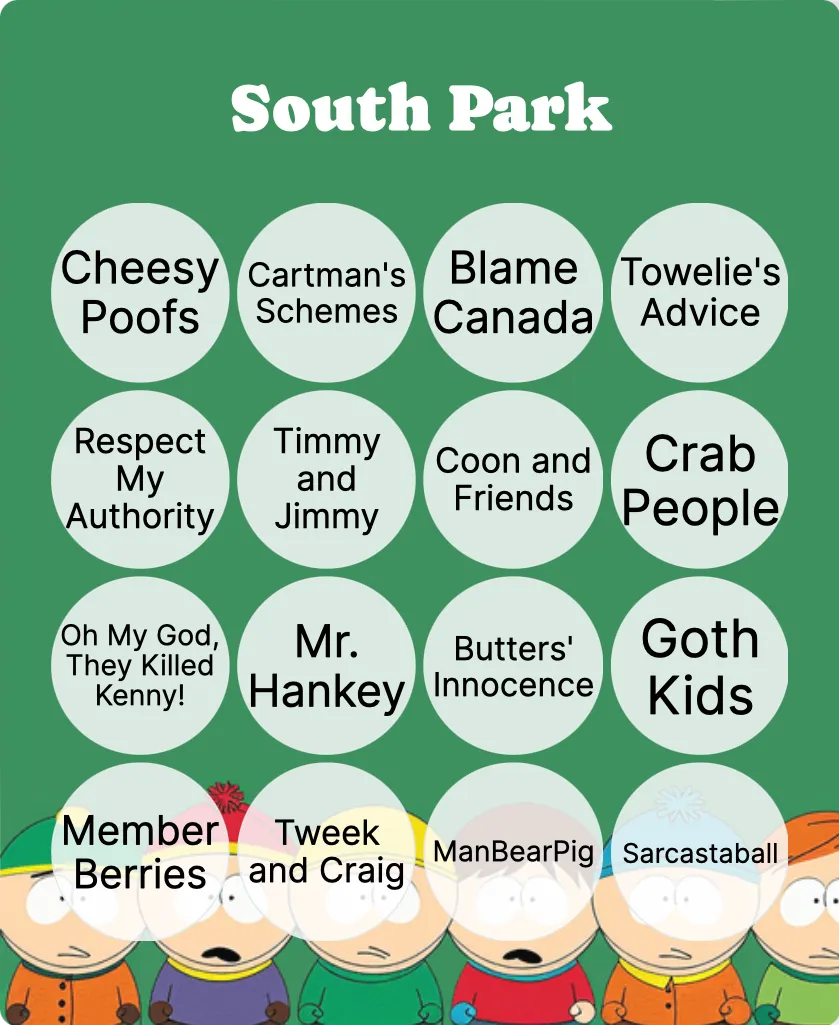
South Park bingo

Treasure Island bingo
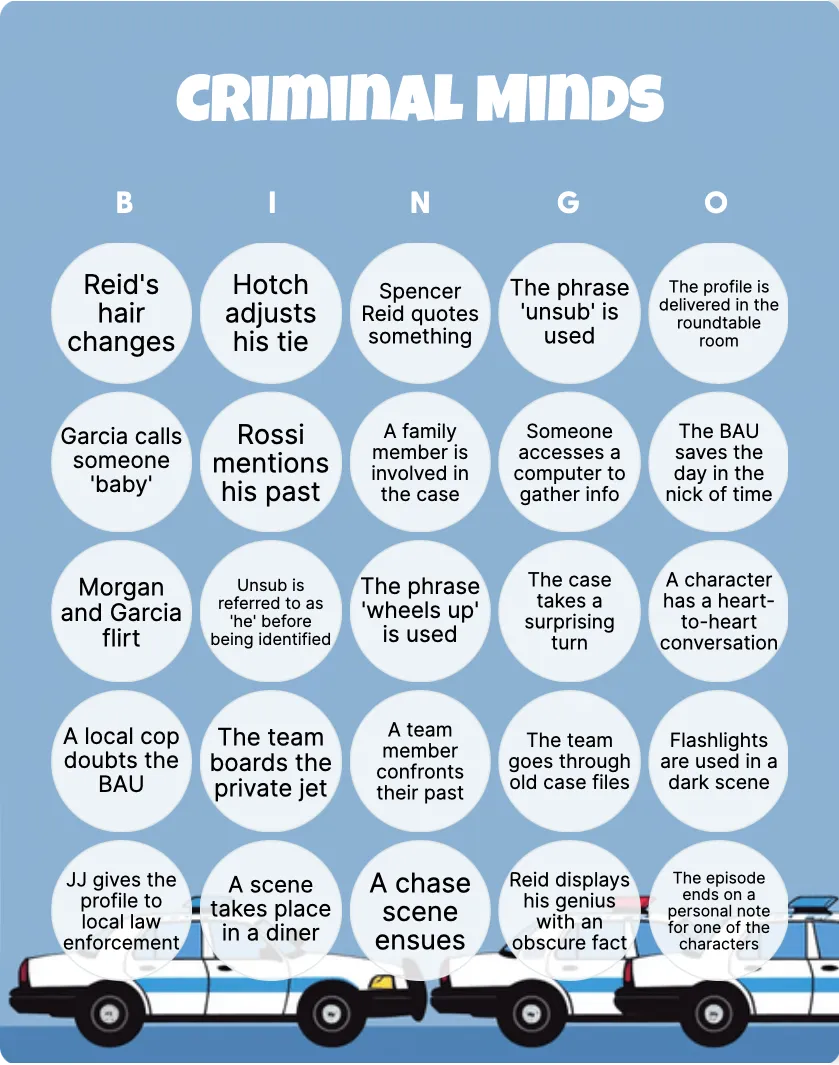
Criminal Minds bingo
18+Challenging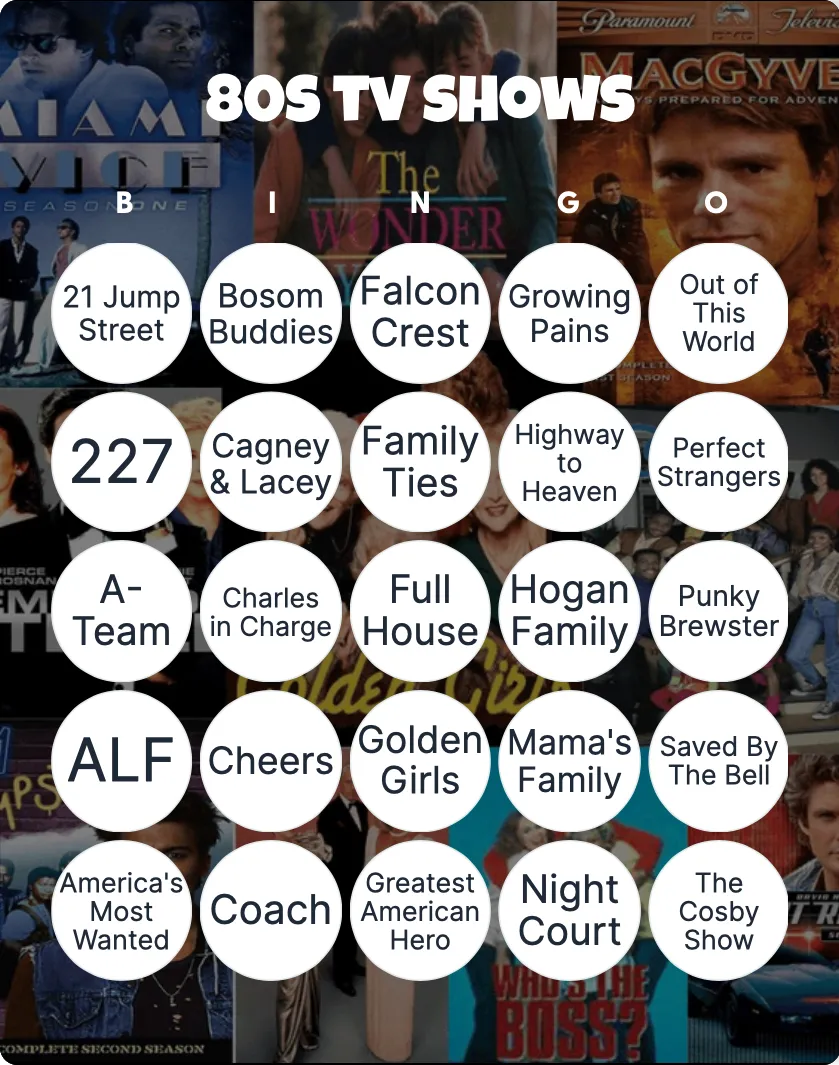
80s tv shows bingo
5+Intermediate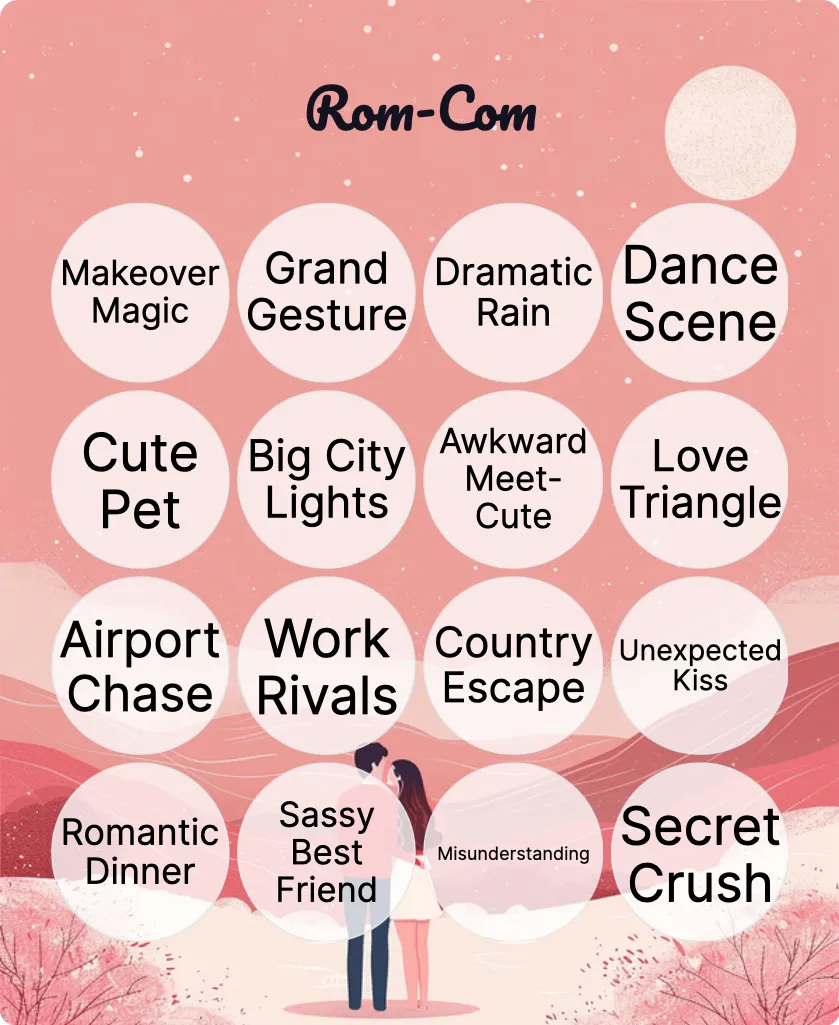
Rom-Com bingo
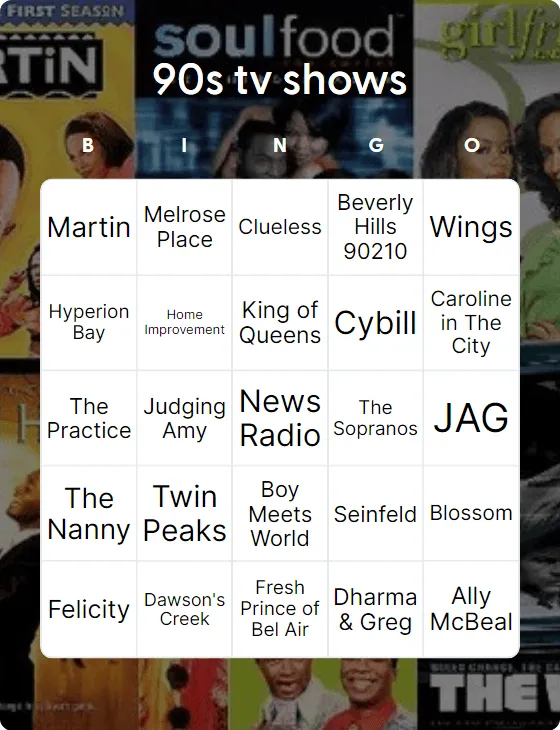
90s tv shows bingo
5+Intermediate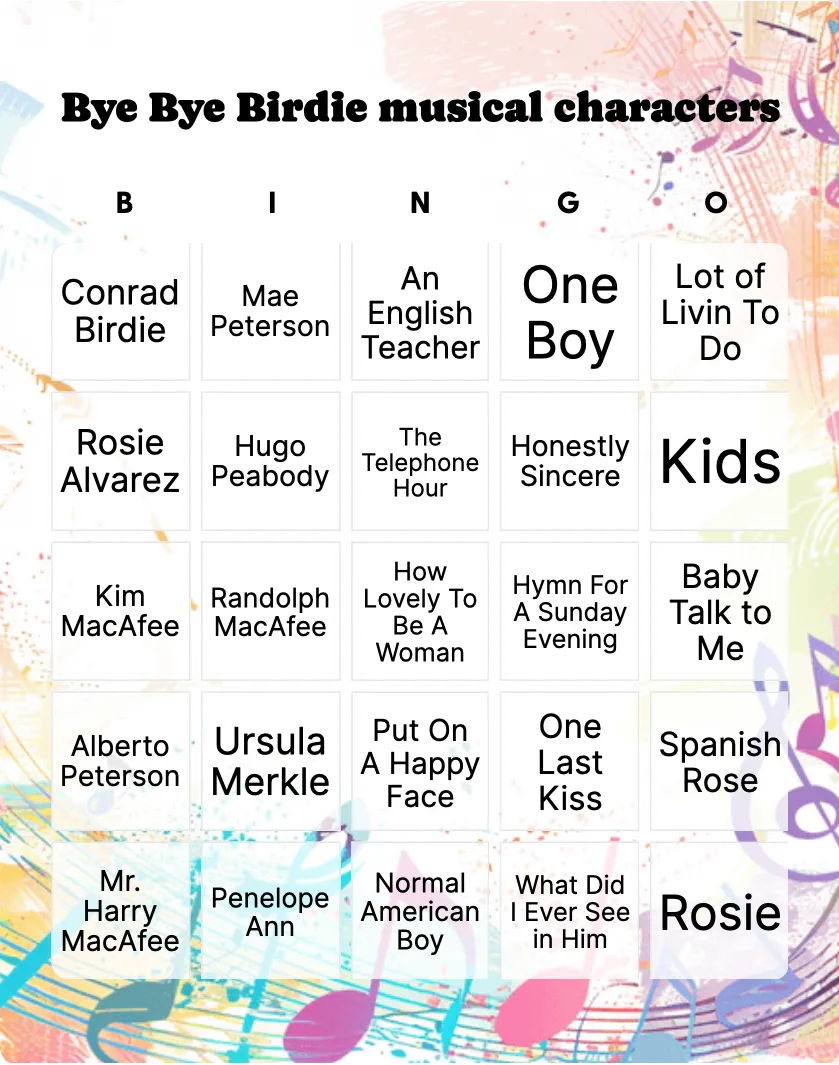
Bye Bye Birdie musical characters bingo
5+Intermediate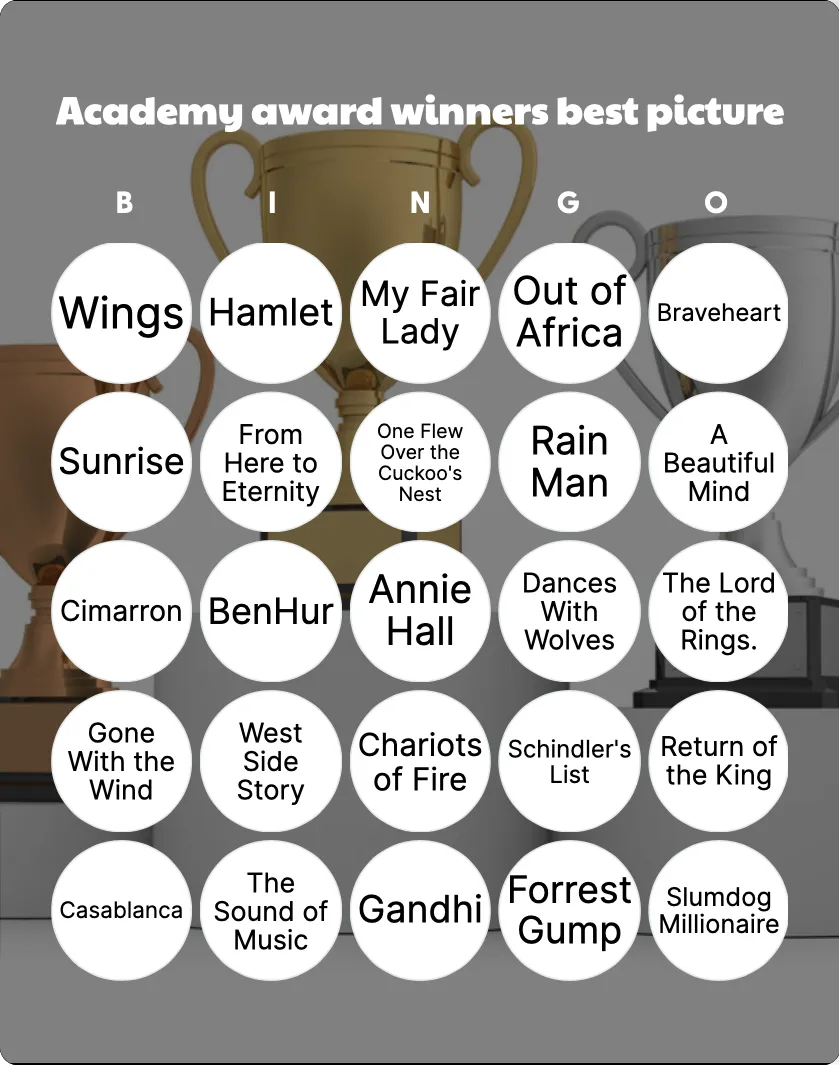
Academy award winners best picture bingo
12+Challenging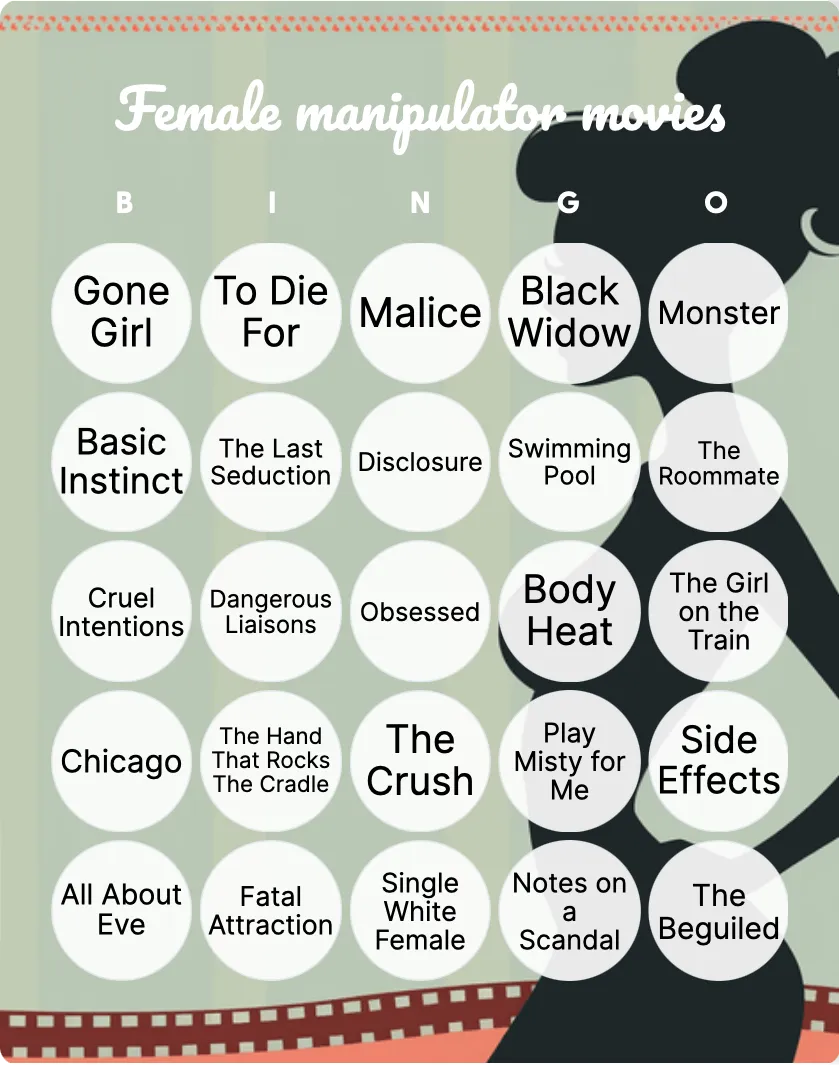
Female manipulator movies bingo
18+Challenging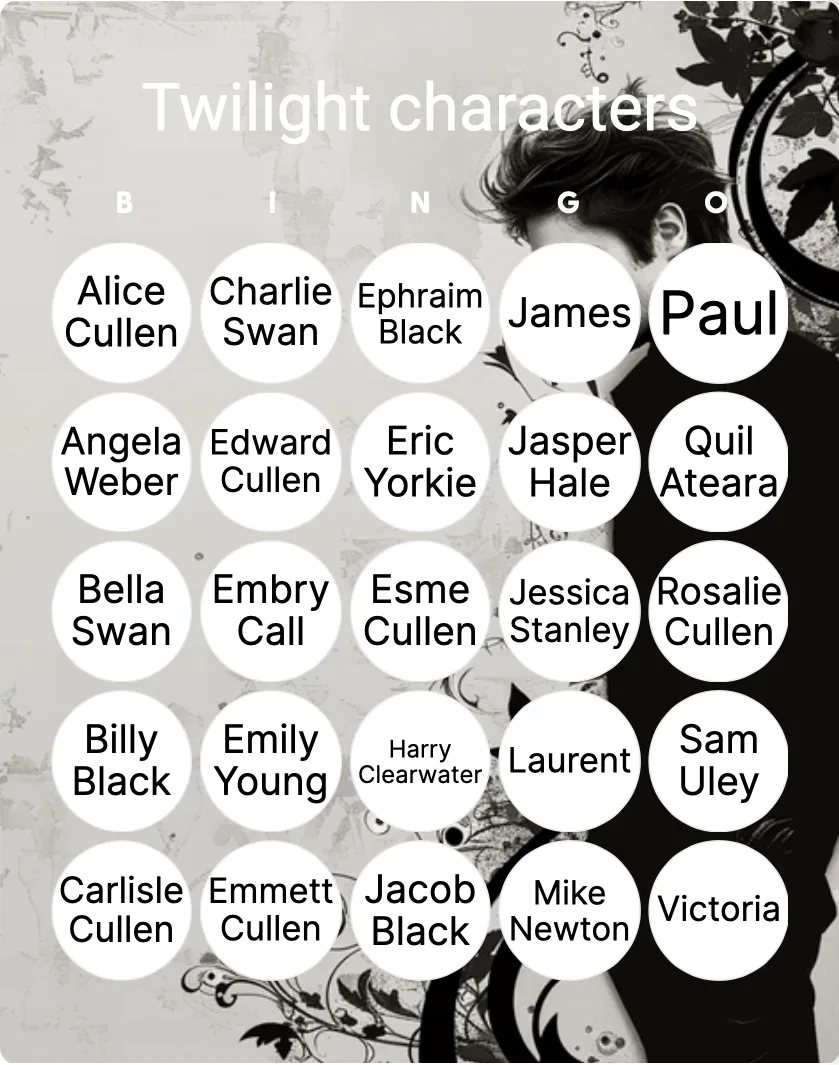
Twilight characters bingo
12+Intermediate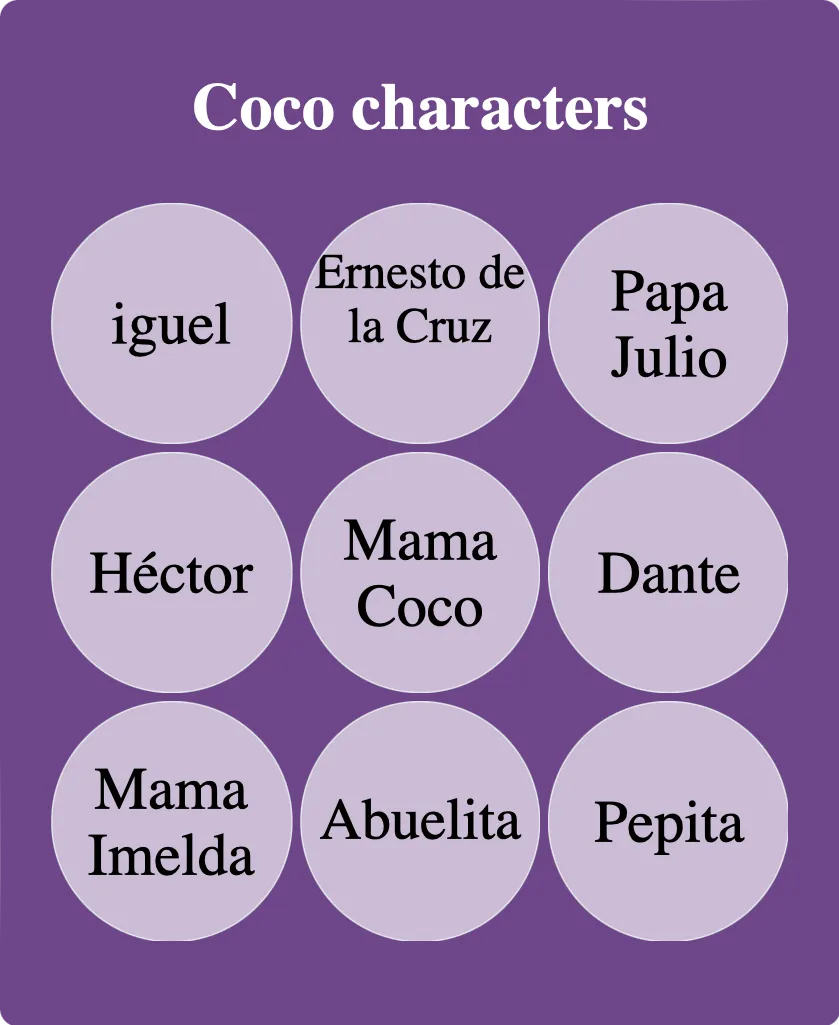
Coco characters bingo
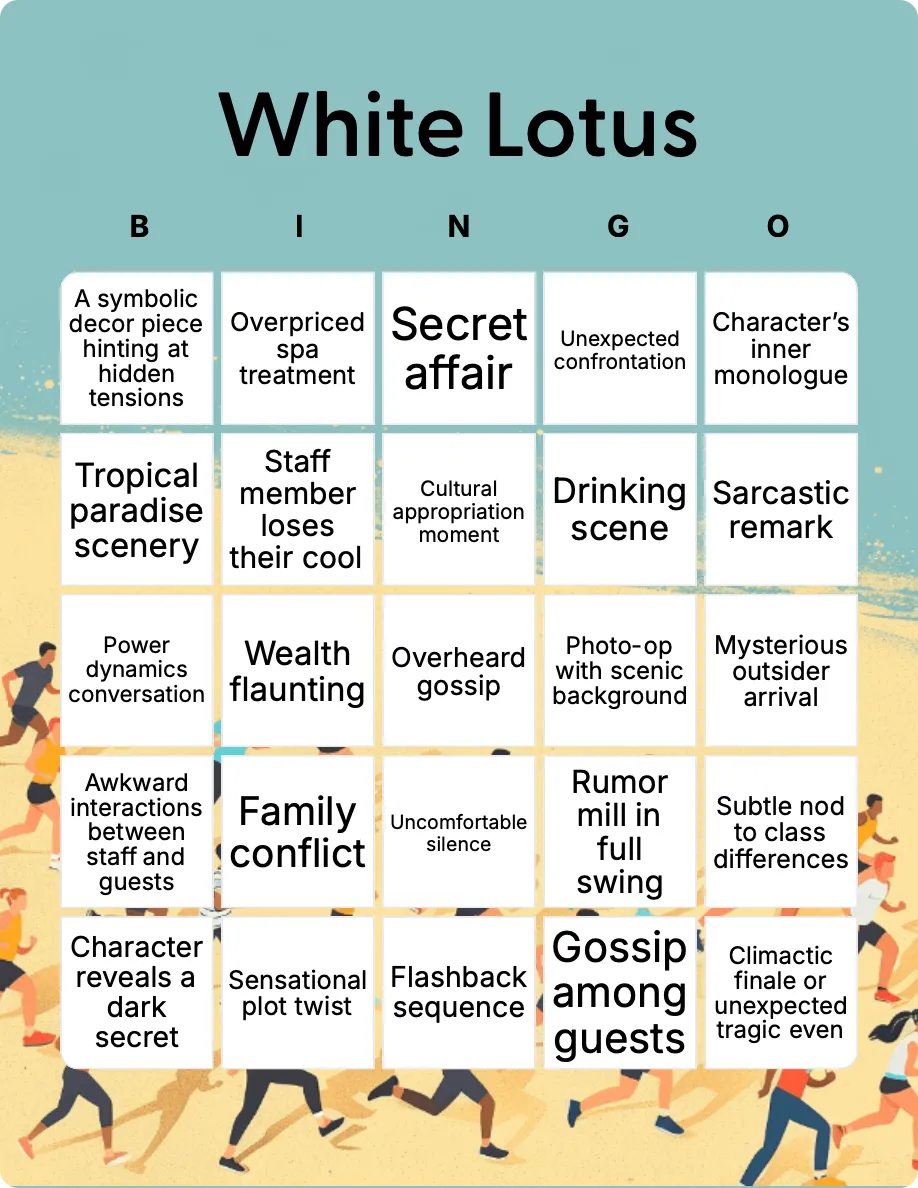
White Lotus bingo
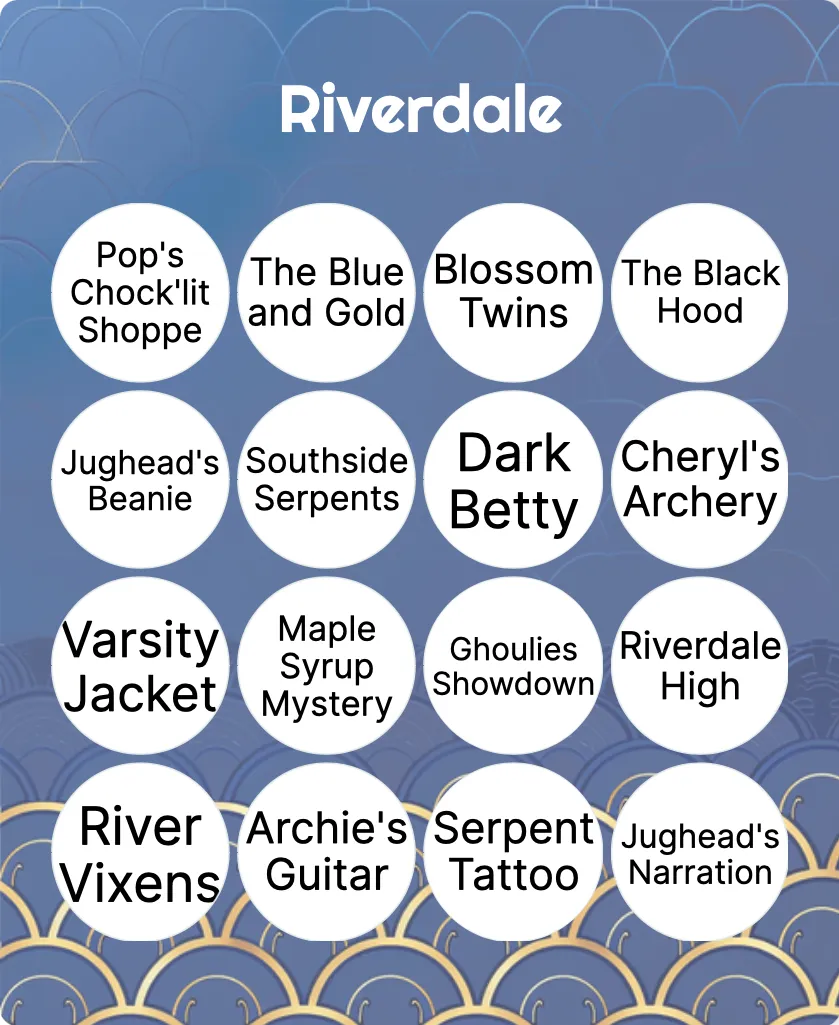
Riverdale bingo
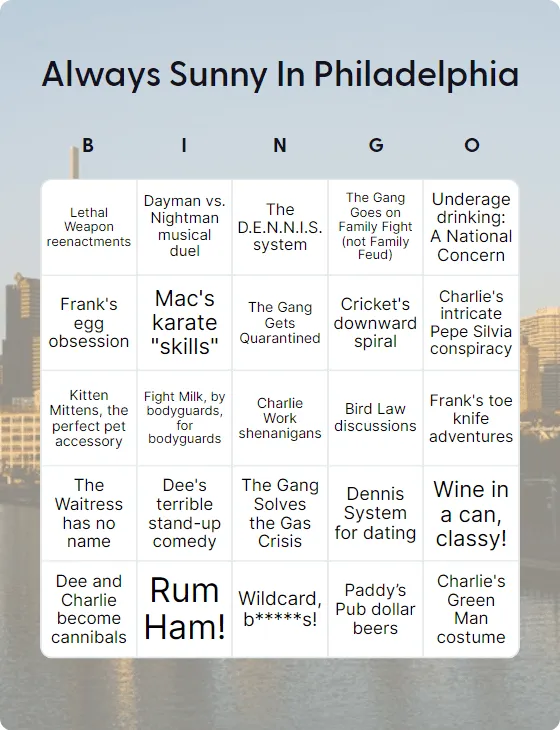
Always Sunny In Philadelphia bingo
18+Challenging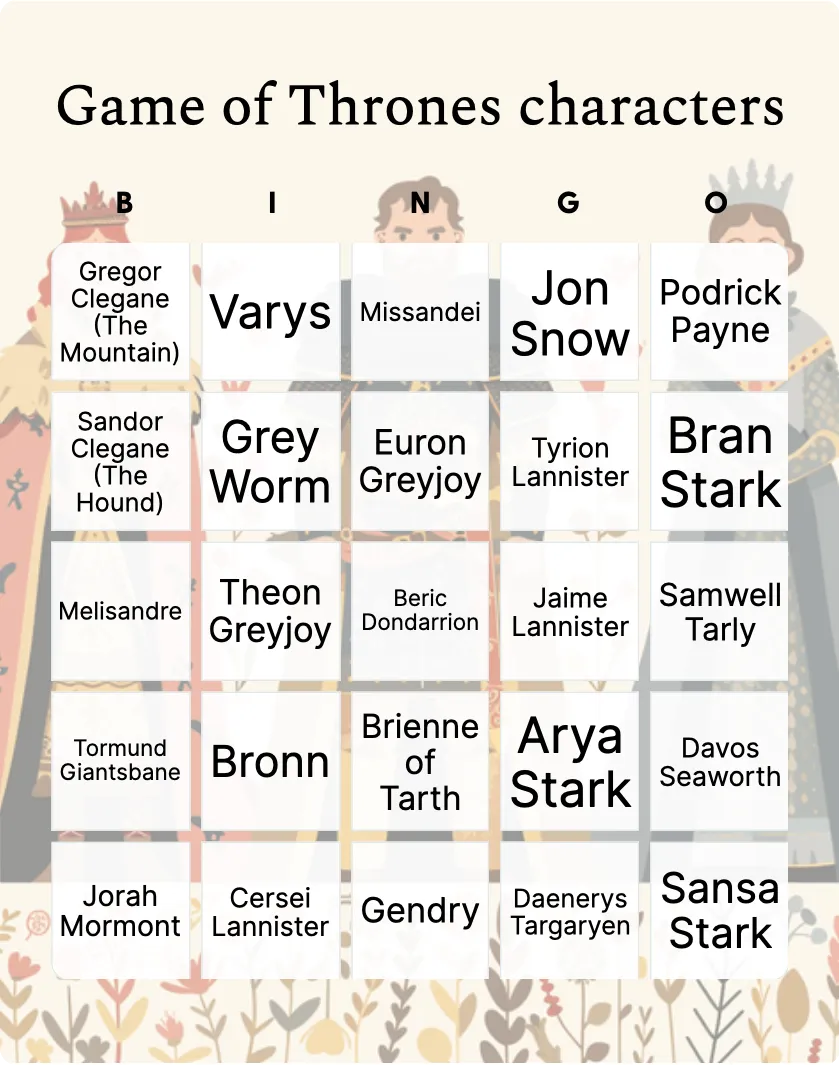
Game of Thrones characters bingo
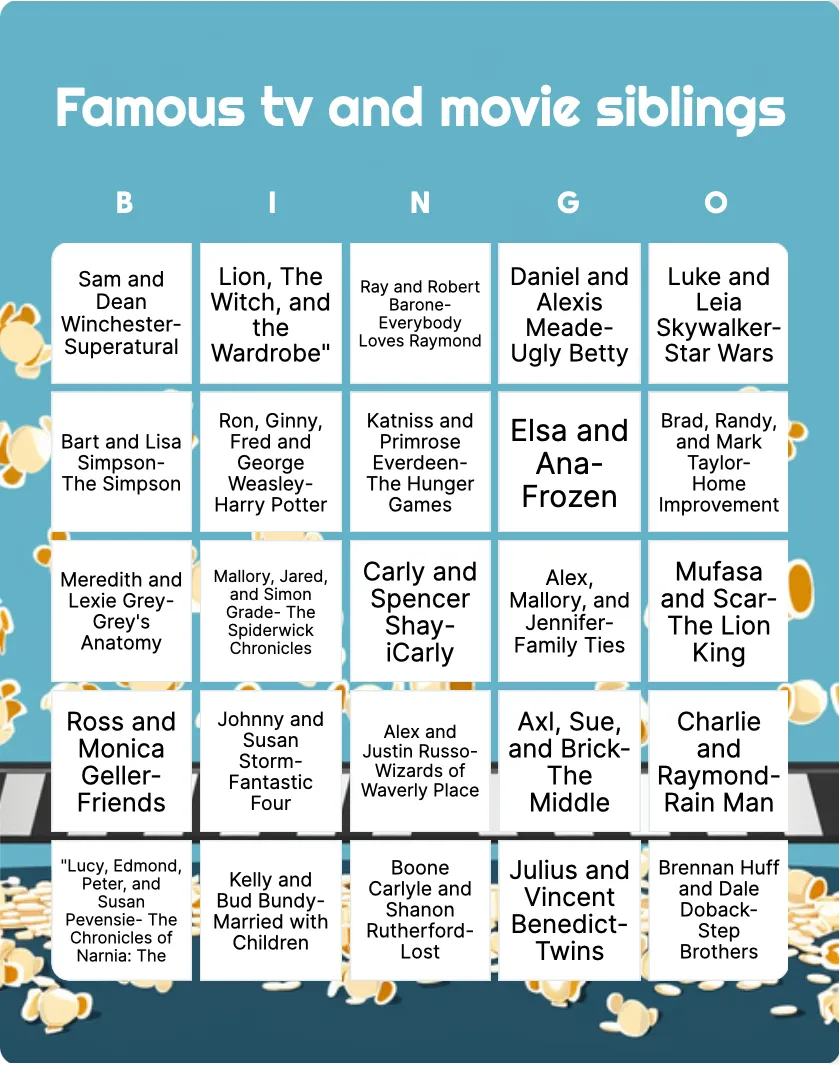
Famous tv and movie siblings bingo
5+Intermediate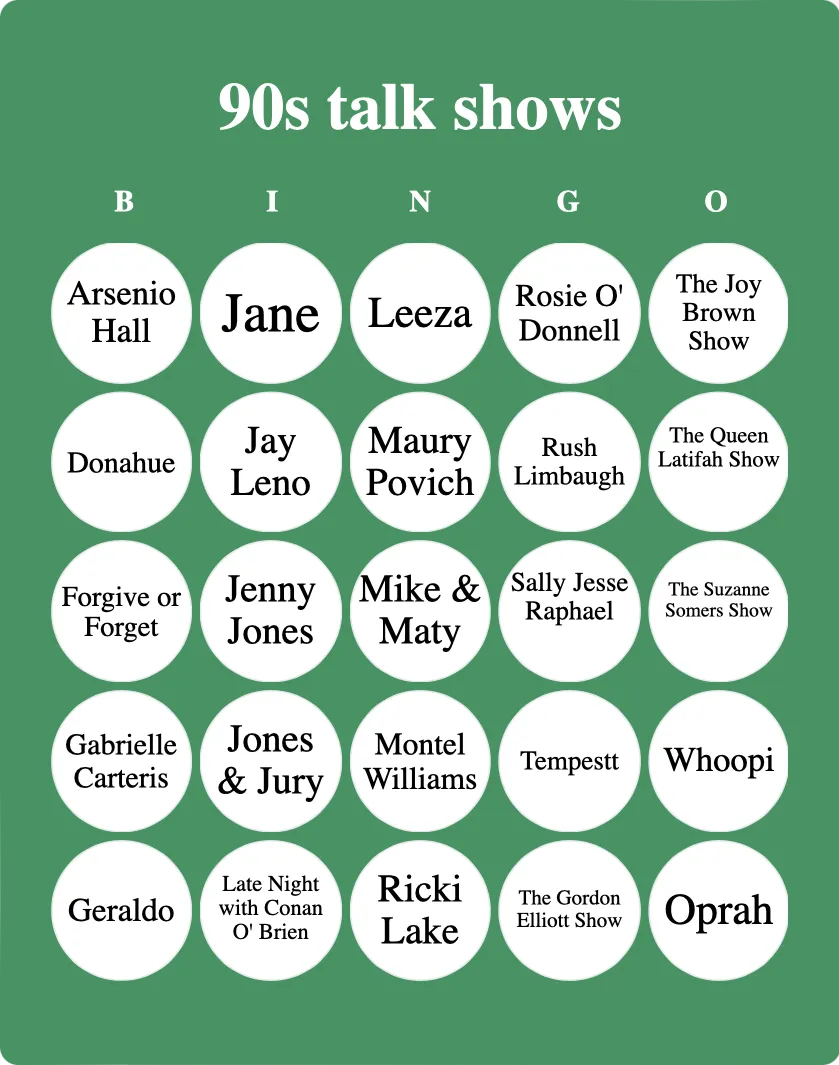
90s talk shows bingo
12+Intermediate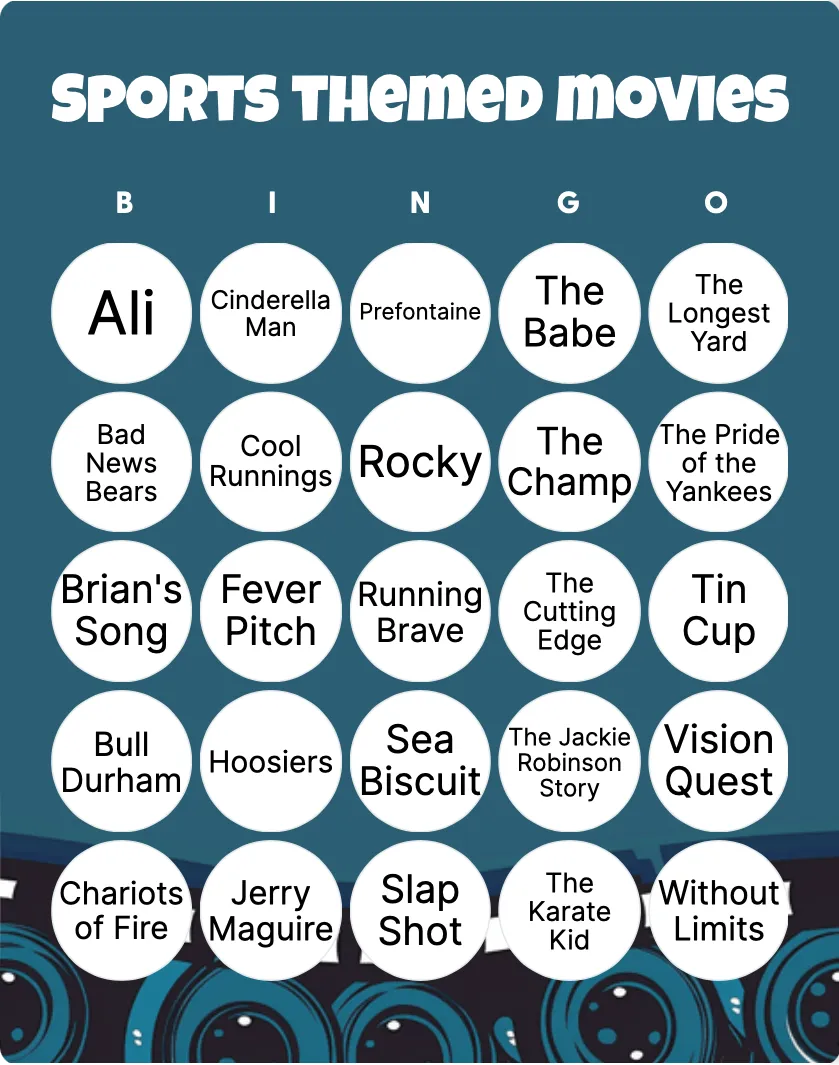
Sports themed movies bingo
12+Intermediate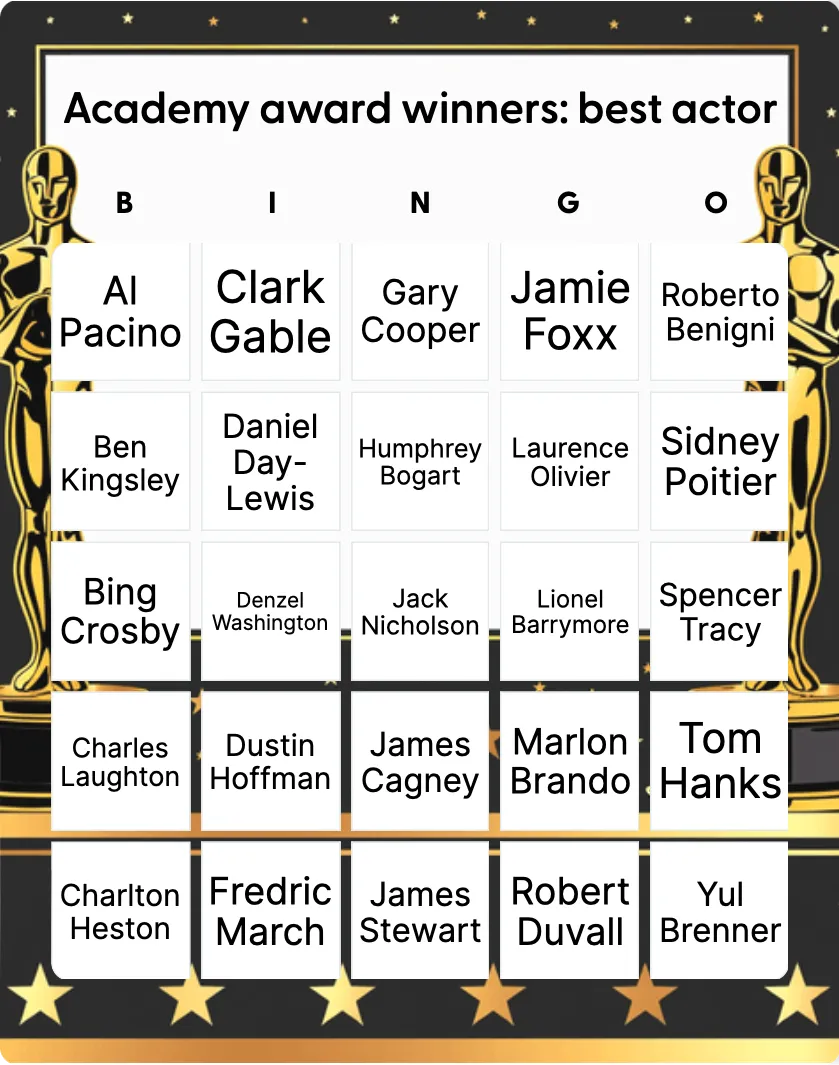
Academy award winners: best actor bingo
16+Challenging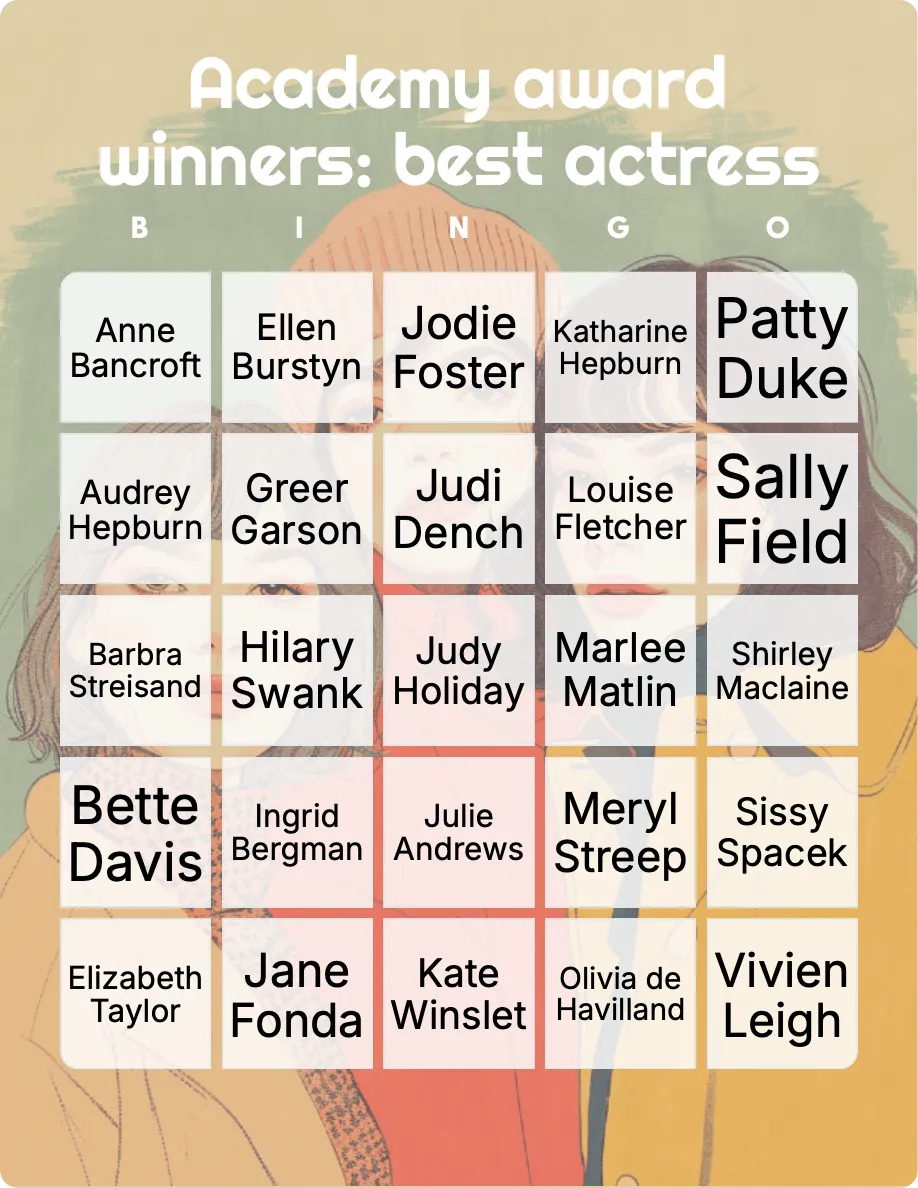
Academy award winners: best actress bingo
12+Challenging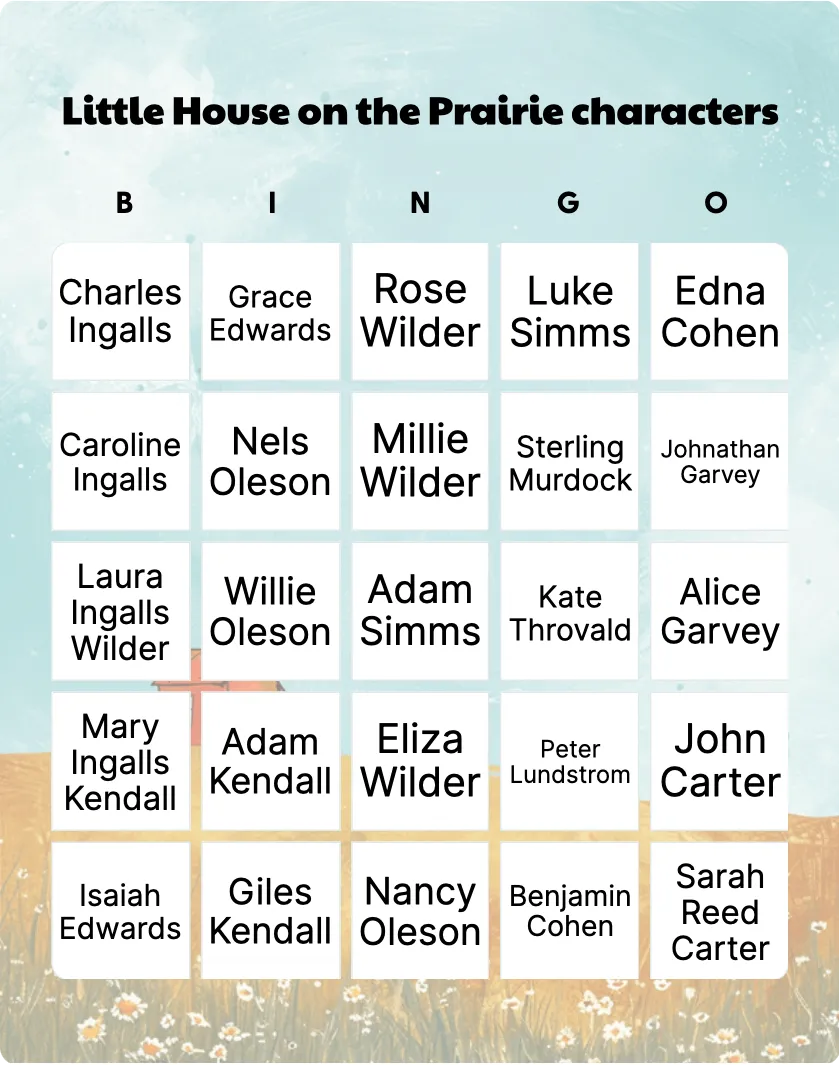
Little House on the Prairie characters bingo
5+Intermediate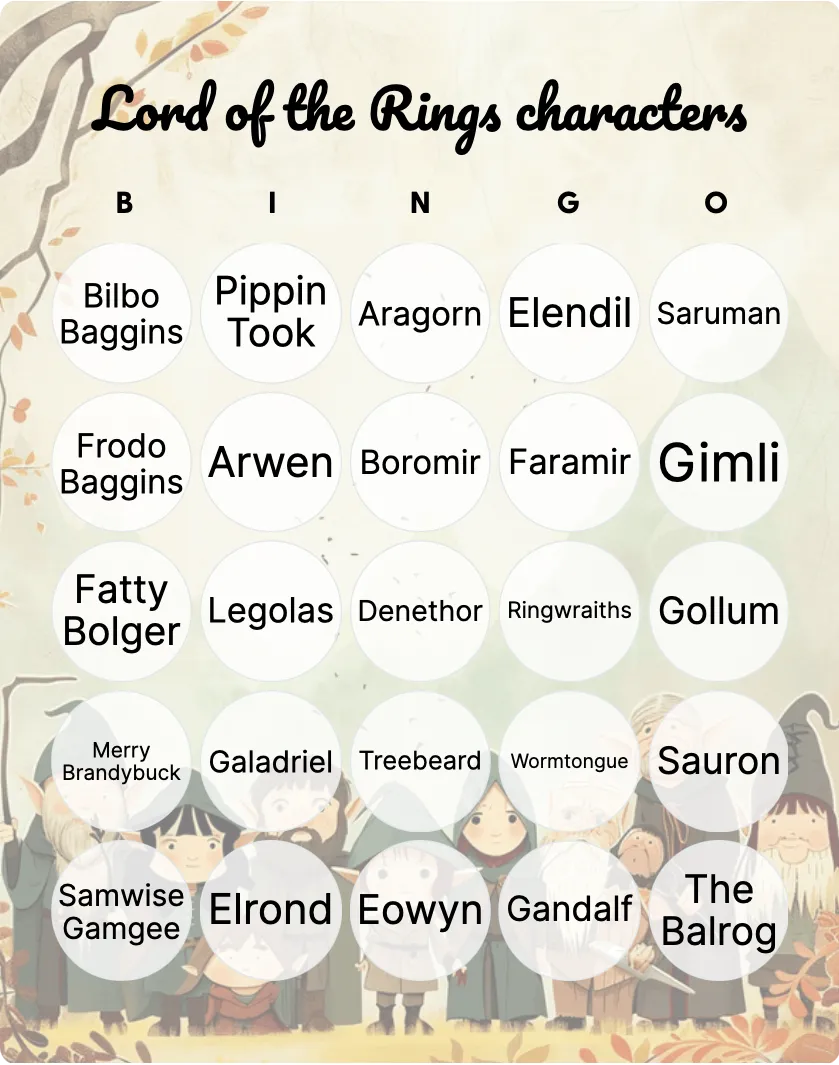
Lord of the Rings characters bingo
12+Challenging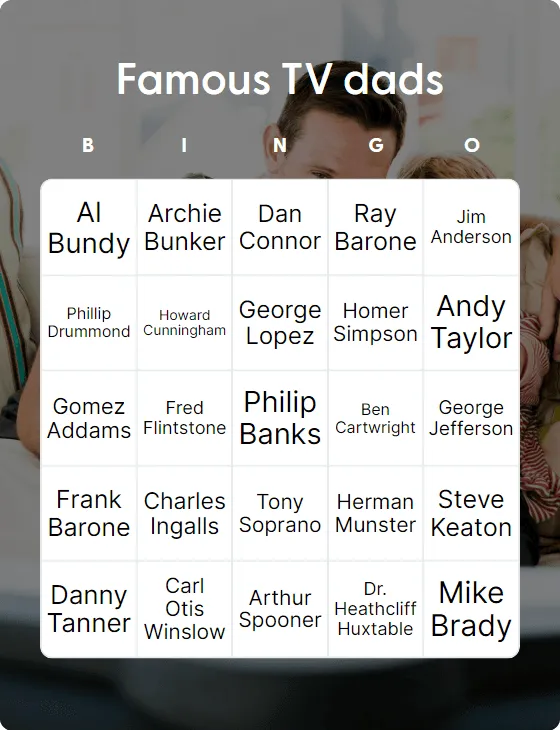
Famous TV dads bingo
5+Challenging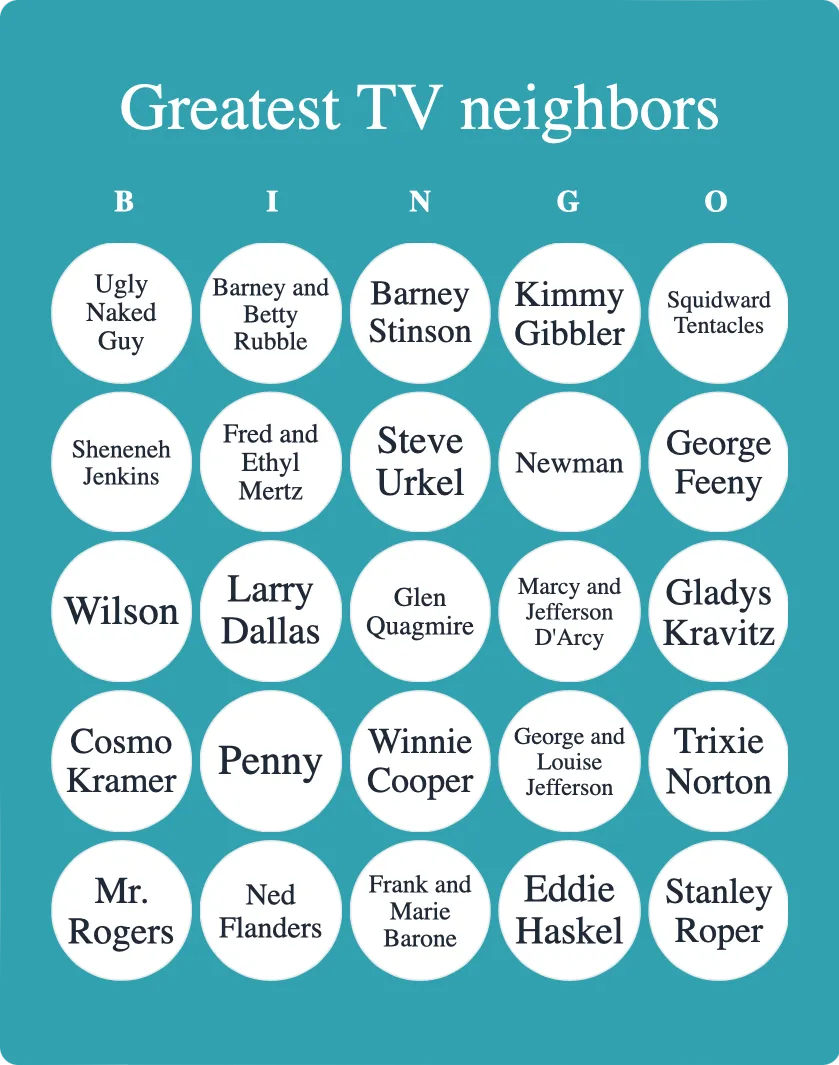
Greatest TV neighbors bingo
12+Intermediate
Mad Max bingo
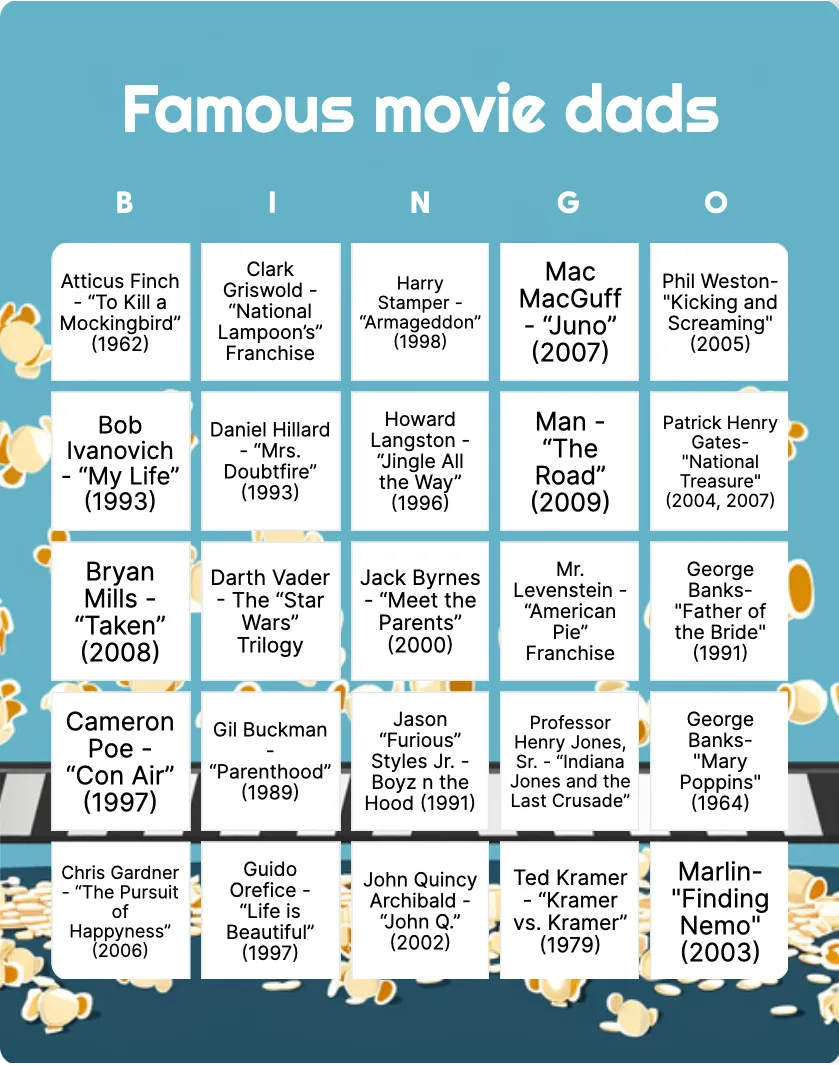
Famous movie dads bingo
5+Intermediate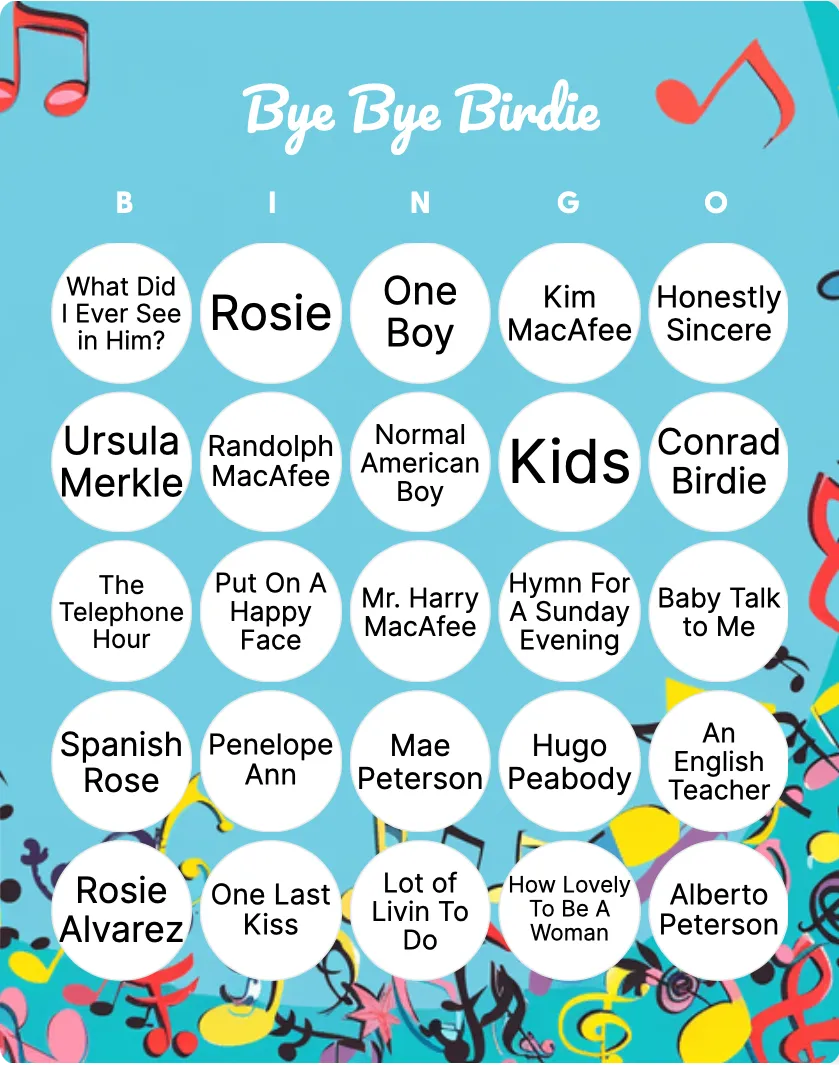
Bye Bye Birdie bingo
5+Intermediate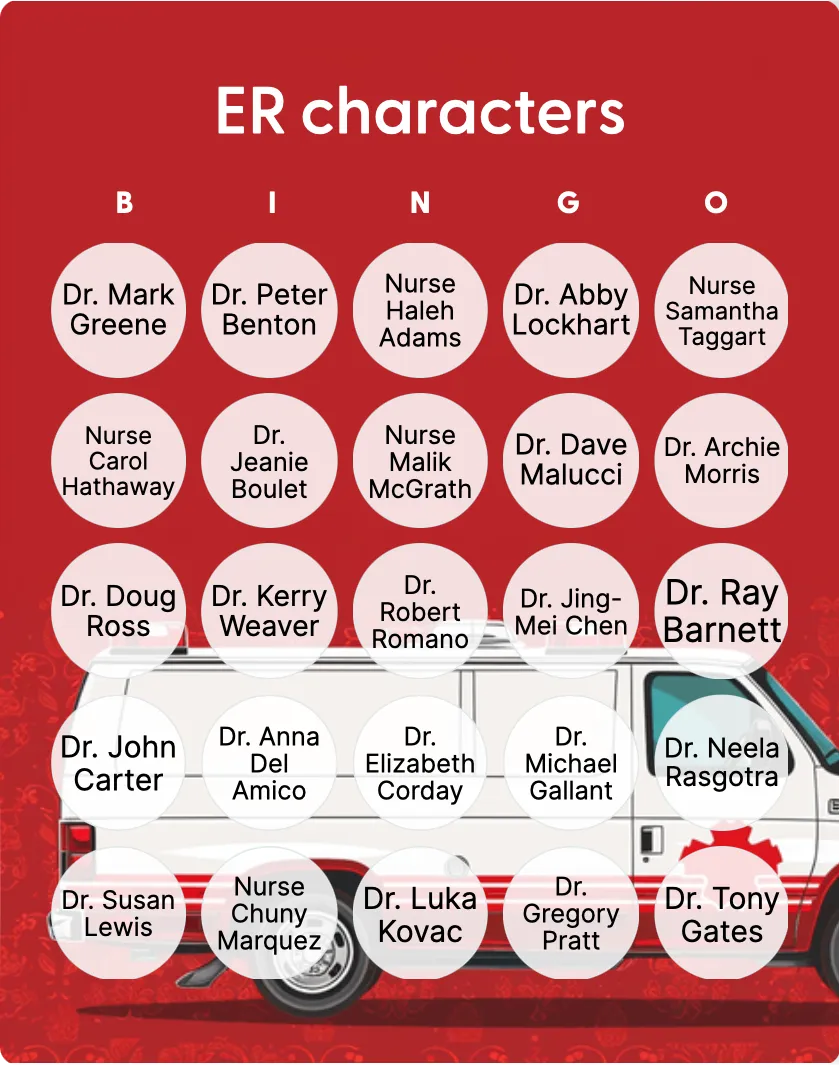
ER characters bingo
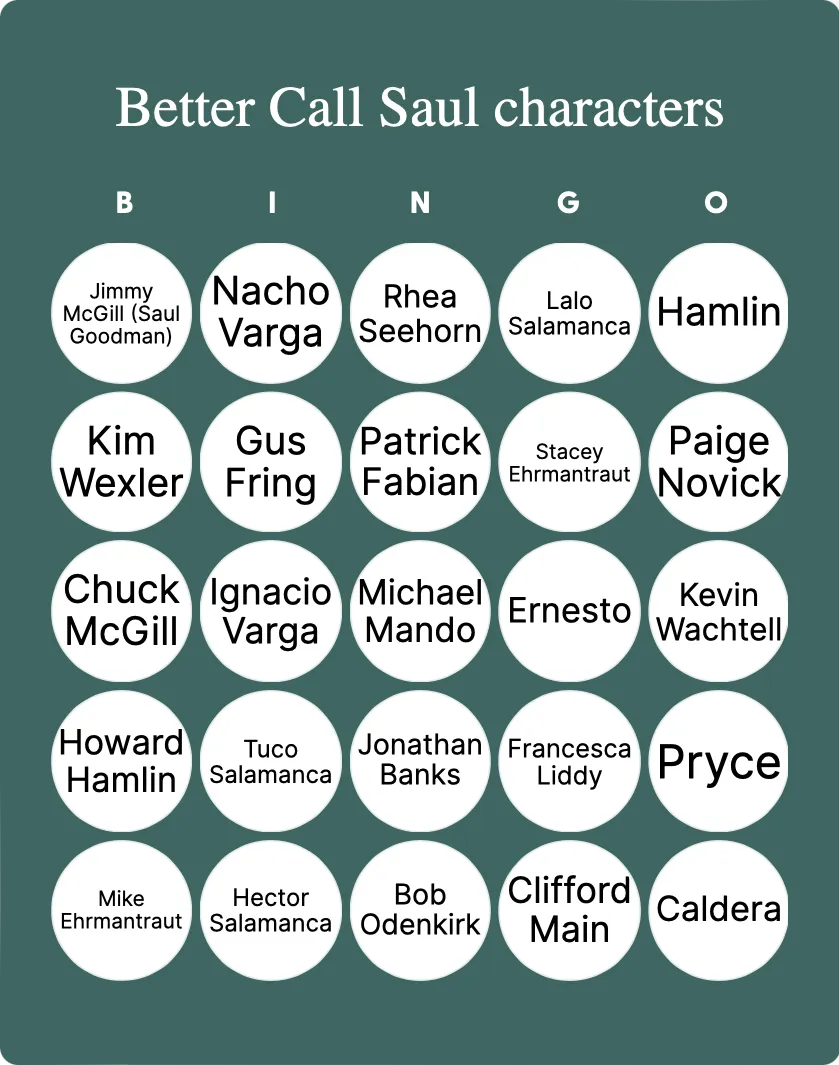
Better Call Saul characters bingo
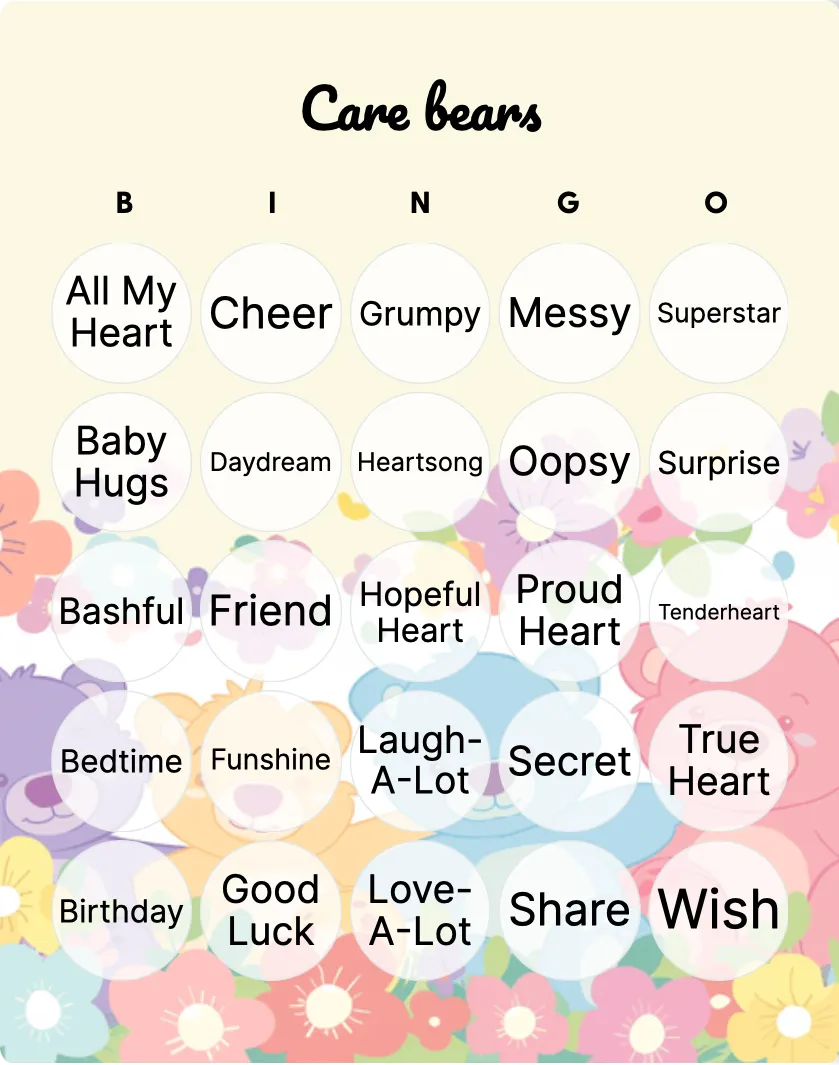
Care bears bingo
5+Easy
How to set up film and TV bingo
A film and TV bingo card can be about what appears on screen, what the group knows, or what happens during a live event. Define that job first. A trope card works during a genre film, a title card can become a called quiz, and an awards card tracks moments in a broadcast. Using the wrong format creates more confusion than the rules can fix.
Match the card to the viewing plan
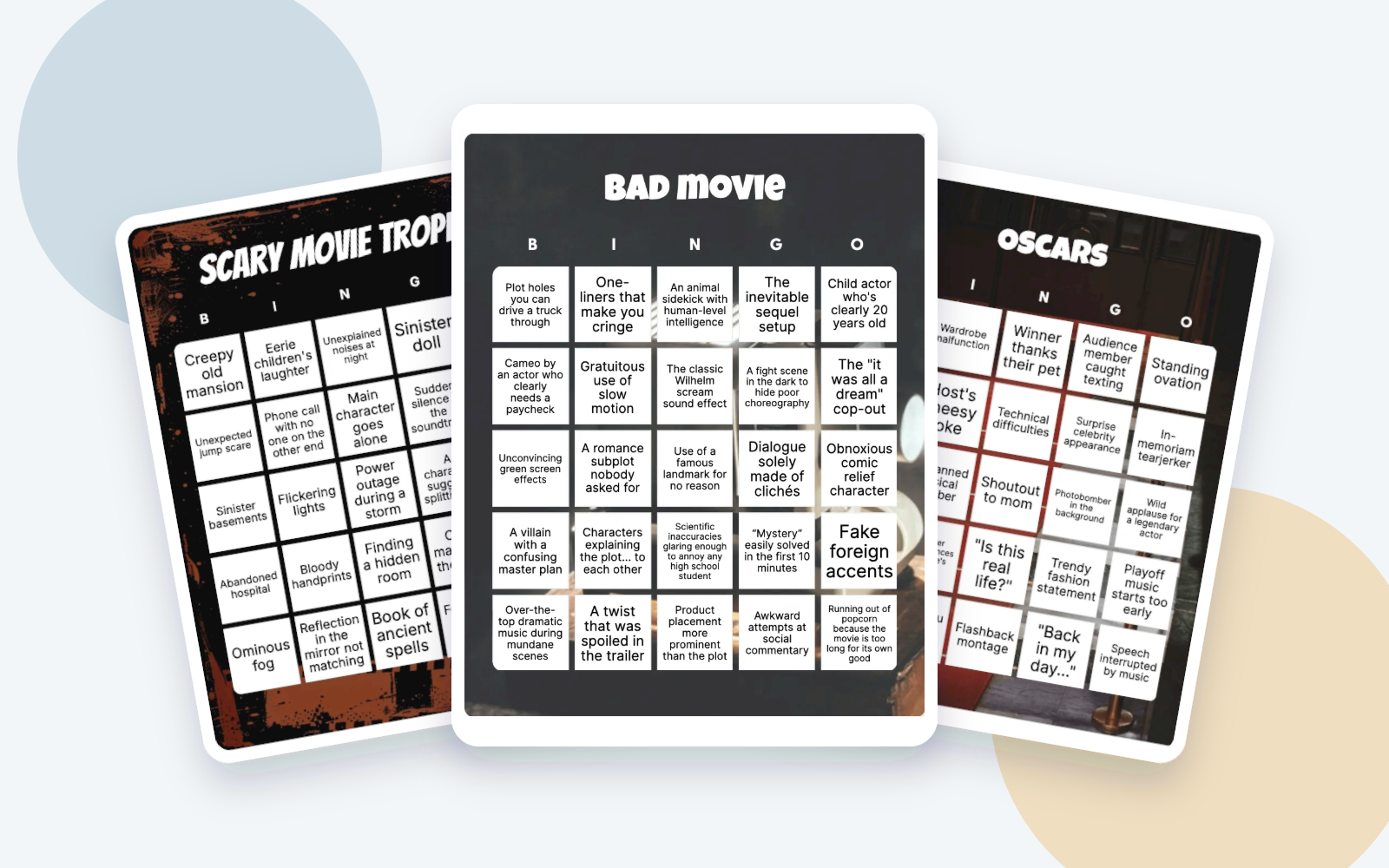
- Scary movie tropes includes observations such as a creepy old mansion, an unexpected jump scare, a sinister basement, an abandoned hospital, and ominous fog.
- Bad movie asks players to notice features such as plot holes, unconvincing effects, and overdramatic music.
- Oscars is designed around live-event moments such as a long acceptance speech or a crying winner.
Other cards use film titles, series, characters, genres, awards, or decades. Choose one film, an announced marathon, a defined set of episodes, or one broadcast. A card based on material outside that scope will either reveal spoilers or leave squares impossible to mark.
Agree on spoilers and pauses
If anyone is watching for the first time, remove squares that reveal later events, identities, relationships, or outcomes. Keep discussion within the film or episodes everyone has already seen. A square should not force an experienced viewer to explain a spoiler.
Decide whether play pauses when someone marks a square. Pausing makes an uncertain moment easier to check but can interrupt the viewing. Continuous play keeps the screen moving; players can note a scene or approximate time and check at a natural break. Use one rule for the whole group.

Define what counts
Observation prompts can be subjective. Before play, clarify vague terms such as “plot hole,” “dramatic entrance,” or “bad effect.” Choose one host to make close rulings, and apply each ruling to every card. For live events, decide whether something counts when it first happens, when it is mentioned, or each time it recurs.
Keep cards visible without blocking the screen. If players use phones, lower screen brightness and mute notifications. For printed cards, choose markers that can be moved quietly and do not cover the square completely.
Write original custom prompts
Describe general observations in your own words. You can refer to a type of scene, a genre convention, a broad character role, or a public event in the broadcast. Do not copy dialogue, song lyrics, screenshots, posters, logos, or character artwork into the card or editorial image. Original descriptions are easier to fit on a square and clearer to rule on.
Prepare the round
- Define the film, episodes, marathon, or broadcast in scope.
- Choose a trope, title, character, genre, or live-event card.
- Review every square for spoilers and ambiguity.
- Set pause, evidence, ruling, and winning rules.
- Prepare cards using the printing guide, or use the online play guide for a remote watch party.
Handle missed or disputed moments
- Someone misses a moment: use the agreed note or timestamp process rather than rewinding immediately.
- A square is subjective: accept the host’s consistent ruling and revise the wording for another round.
- The card contains a spoiler: remove it before play; do not explain it to newcomers.
- The game distracts from the film: switch to checking only at natural breaks.
A narrow viewing scope and a simple ruling process keep the card from interrupting the film or broadcast.
Generate bingo cards,
your way
Unleash your creativity with our versatile generator that simplifies the creation of personalized cards featuring text, emojis, and images!
Create card
Frequently asked questions
Should film bingo pause when someone marks a square?
How do I avoid spoilers on a film or TV bingo card?
Can bingo be played during a live awards show?
Can I make a custom film or TV bingo card?
You may also be interested in....
Not quite found the card you were looking for? Here are some similar categories that you may be interested in.